The Berlin Blockade 1948-49
Berlin was the final battleground of WW2; along with the rest of Germany, in 1945 it had been split into four sectors: Russian, American, British and French. As the capital of Hitler's Germany, Berlin was deeply symbolic. It was also deep inside the Russian sector of Germany. The Four Powers were supposed to work together to run Germany after the war, but the escalation of the Cold War made an agreement difficult – issues rapidly emerged.
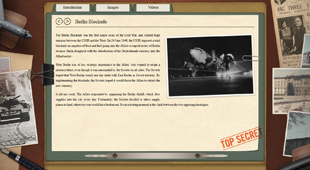
In a way, it was surprising that it was not until 1948 that a major clash occurred! The Berlin Blockade was the first major crisis of the Cold War, creating huge tension between the USSR and the West. On 24 June 1948, the USSR imposed a total blockade on supplies of food and fuel going into the Allied-occupied sector of Berlin.
Why did Stalin impose a blockade? What was he trying to achieve? And how would the West respond? This section explores the events of 1948-49 and their impact on the Cold War.
 Click here to download this lesson as a PDF
Aims:
- Understand the significance of Berlin 1945-1949
- Explore what motivated Stalin to act as he did
- Reach a reasoned conclusion after exploring the evidence