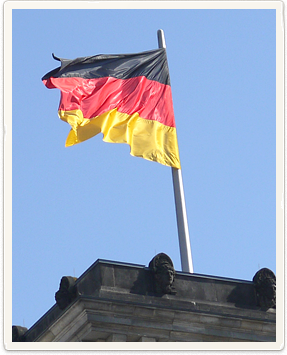
With the collapse of the Berlin Wall in November 1989, moves towards the reunification of East and West Germany gathered momentum. The political climate was right for a reunification that would have been unthinkable at any other point in the Cold War.
The Reunification Treaty was signed on 31 August 1990, marking a truly historic moment for Germany and for Europe. The city of Berlin was also unified. Allied forces left Germany during 1994, and Russian ground forces had withdrawn permanently by 31 August 1994.
Their departure was marked by a military ceremony in Treptow Park. A united Germany automatically retained membership of NATO and the European Community, aligning itself with the West rather than the Soviet East.
One of the key challenges for the new Germany was merging two different economic systems and the adoption on 1 July 1990 of a single currency, the Deutsche Mark, which was previously the currency of West Germany. East Germans had largely lived under economic poverty and restrictions for over forty years. Now they benefited from a capitalist economy; amongst other things, that meant more choice for consumers.
Today, Germany has become one of the strongest economies in Europe.

